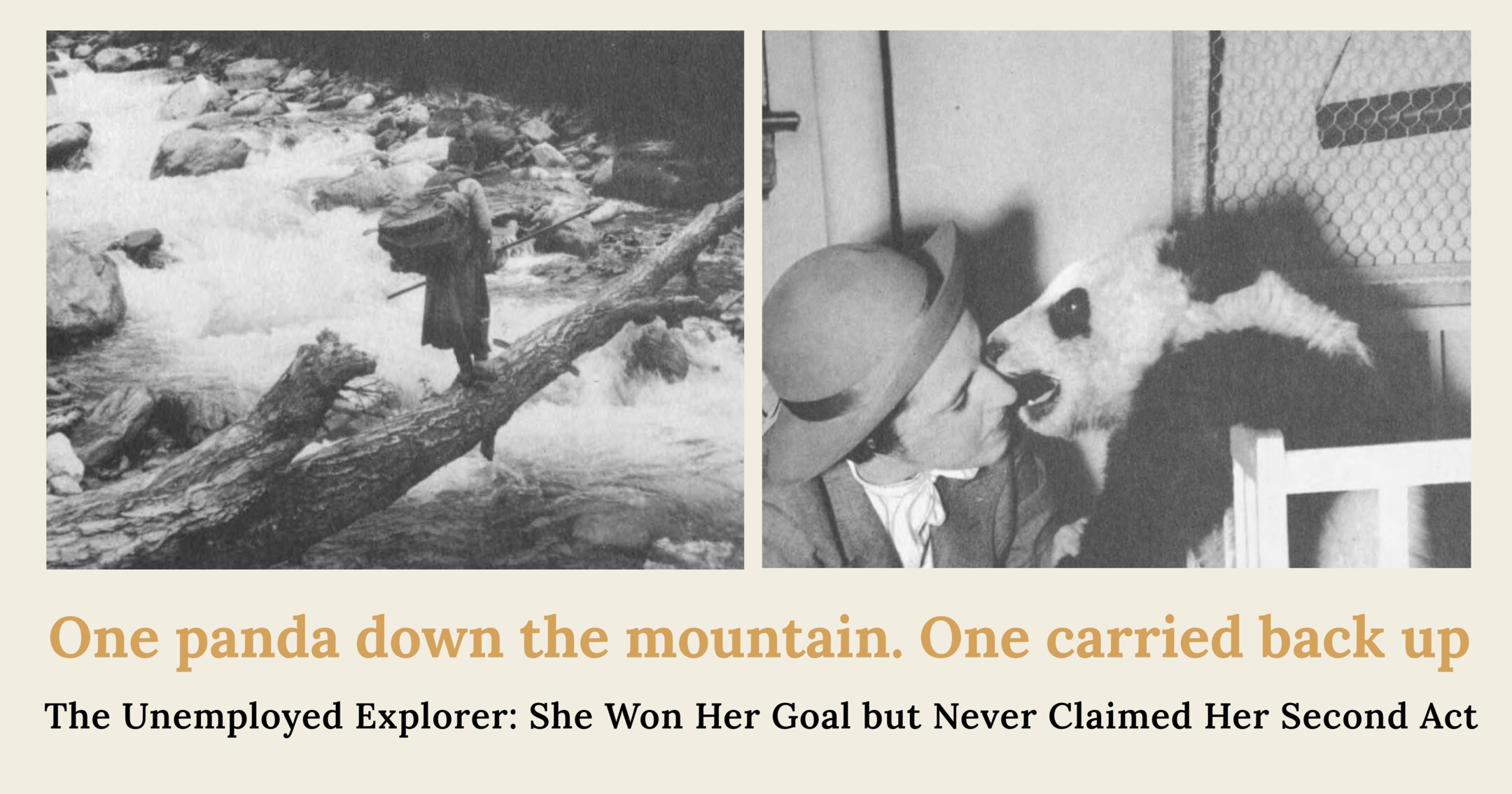
JULY 1938. Qionglai Shan, Sichuan, China.
The world’s most famous panda catcher was over nine thousand feet up, totally isolated, wet and waiting in a remote cave. A torrent of rain had trapped her and her local cook. They ate fried cucumbers and coagulated chicken blood for breakfast as streams ran through the middle of their primitive camp.
“My one quilt is so wet it could be almost wrung out…full of fleas…all my clothing is clammy and my feet are never dry.” Her Chinese companion lit incense and burned paper in hopes of appeasing the mountain gods. Both were miserable as they waited and wondered.
Would the panda cub return? Did she want it to come back? Would it remember her? Could it survive alone?
Ruth Harkness (1900–1947) was on her third panda expedition in China. She had recently published her memoir The Lady and the Panda describing her husband’s failed panda hunt, his lonely death from cancer in Shanghai, and her decision to retrieve his remains and take up his quest as her own.
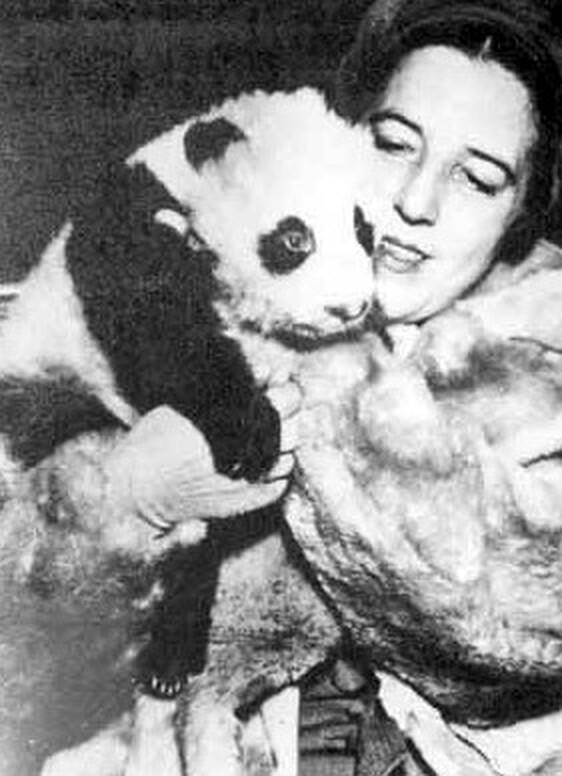
Against all expectations, this widowed dress designer from New York had done it. Over two seasons in late 1936 and again in 1937 she’d adventured into this remote mountainous region of China, and her expeditions had captured the first and second live pandas ever brought out of the country. These two black and white bundles of cuteness were delivered to the United States and received by record crowds at the Brookfield Zoo in Chicago. Ruth herself was lauded on best-dressed lists and even appeared in a Quaker Oats ad.
This was to be her third expedition, but in these final moments, she was not panda hunting; she was panda returning. Days earlier and with a heavy heart, she had carried another captured panda up this mountain. Unlike her previous panda babies, Su-Sen, “little tomboy,” a tree-climbing kindred spirit who Ruth described as “utterly fearless—nonchalant and doesn’t give a damn about anything,” was being set loose near the spot where the panda had been captured.
Ruth Harkness must have been awash in emotions and memories as she “watched for the beloved Su-Sen constantly, and hoped she would never see her again.” Her own expedition, as she later wrote, “put in reverse.”
She was the panda-woman with no panda left to hunt. One panda carried down the mountain. One carried back up. Same woman, same goal, but now standing at different phases and landing at the ambiguity that is the crossroads of momentous endings and potentially new beginnings.
What happens when the end you wanted and strived for arrives? How do we navigate the after-phase once we’ve reached a goal or a peak goal like Ruth Harkness did?
As we pursue our goals and our life journeys, we go through different phases that call upon us to read the situation, face decisive moments, and make choices. For most of us these are the forks in the road that define a life. For some these forks and phase reading carry deadly consequences if we read the phase wrong.
Years earlier, from 1881 to 1884, Adolphus Greely and an American crew had successfully planned and staged an epic two-year arctic expedition on remote Ellesmere Island near Greenland. They established a stable basecamp, thrived as a crew, mapped new regions and recorded a wealth of new data. They had achieved their “farthest north.” But as their expected relief ship failed to appear for two summers, thin margins and misfortune compounded as they remained stuck across an icy sea waiting for rescue and wondering how their fate would turn out: Was this the long middle before rescue or the desperate end?
Ruth Harkness had achieved her goal and was, by most accounts, deemed to be the greatest in her field: a triumphant and successful explorer in a world and era dominated by men and epitomized by shot and mounted dead animals while she acted as a mother and had brought a living being home. But her story if viewed across multiple stages carries harder lessons and deeper questions into her ability and our own to handle the post-peak and the post-goal phase.
Ending a phase and finishing a goal are different skills and mindsets than pursuit. Our skills in goal pursuit don’t transfer or teach us how to adjust to what comes after. Harkness pursued the singular thing and mastered the pursuit, but, as we will see, she never found her way through the ending and transition. She could chase but couldn’t disengage from what had defined her nor re-engage with her next new thing.
Finishing hard things is often experienced more as a form of relief than the long expected satisfaction we had hoped for. We envision finishing as a gate we pass through changed and forever satisfied — psychologists call this expectation the arrival fallacy. Instead, strangely, finishing hits us with loss, regrets and a mixed up sense of self and agency.
Put poetically, we can accomplish the mechanics of finishing a thing but we will inevitably experience a certain letdown and uncertainty after, calling for and challenging us to navigate the finishing of a chapter of a life: knowing you’re done, letting go, and starting the next thing. There is a void between a finished pursuit and the unstarted next thing.
The Lady and the Panda: From Widowed Dressmaker to World-Famous Explorer
This retelling draws on Vicki Constantine Croke’s The Lady and the Panda (2005), reconstructed from Harkness’s letters home alongside her own memoir (1938) and Pangoan Diary (1942). Croke traces Harkness’s routes, local guides and timelines in vivid detail against a China sliding toward World War Two — a war that would eventually bomb Harkness’s own Shanghai hotel.
Born in 1900 to a working-class family in small-town Pennsylvania, Ruth McCombs left for New York and spent her early adulthood as a dress designer. Part of the flapper generation, she drank, smoked and socialized late. After years of dating, she married William Harkness Jr. on September 9, 1934, and within two weeks, he departed for China without Ruth.
Bill was the expected hero of this story: a wealthy, Harvard-educated adventurer who had already captured Komodo dragons in Indonesia and was now angling for the greatest prize amongst swashbuckling hunters and collectors: the giant panda, an animal no Westerner had ever brought out of China alive. The Roosevelt brothers Theodore Jr. and Kermit, sons of President Theodore Roosevelt and well-funded by Chicago’s Field Museum, had famously shot a panda in 1929, ushering in a period of “expedition after expedition” marching into panda country for their shot.
Catching a live one was, as Ruth later wrote, “just a shot in the dark — one chance in a million.” Bill never got his shot. An ocean and a continent away from his wife, he spent two years stalled in Shanghai with permit problems, a dysfunctional partnership, and endless delays. He died there of throat cancer in February 1936, without ever seeing panda country.
That left Ruth, age 35, widowed, at a choice point. She must have wanted to join that original expedition, having heard her husband’s panda planning for years. She had been excluded as a woman. With no expedition experience, no standing in the boys’ club of exploration, and with nearly everyone doubting her, she took up her modest monetary inheritance of about $20,000 and inherited her husband’s goal too. Having imagined joining years before, I’d say she was clear-eyed that this was a chance worth taking on her own. So she took it and, in the spring of 1936, she sailed for Shanghai to collect Bill’s ashes and to finish what he had started.
In Shanghai, Harkness took up her husband’s mission but almost immediately rejected most of his method and his original team. Bill’s old partner, the veteran collector Floyd Tangier Smith, expected to continue the original arrangement with the widow. After weeks of discussions, she cut him loose. She explained her reasoning plainly in a letter home, “I had the utmost confidence in Quentin [her new guide]. He knew the country, the language; I felt that I did not need a foreigner; in fact, I did not want another foreigner, for by that time I had seen enough of the attitude of most Westerners in China to heartily resent it.”
She didn’t wait on the paperwork or the “old China hands.” She just went for it, quietly and with local help: Quentin Young, a 22-year-old Chinese explorer whose older brother had guided the Roosevelts, and Wang Whai Hsin, a happy, quirky Sichuanese cook who would end up beside her on all of her three expeditions into remote China.
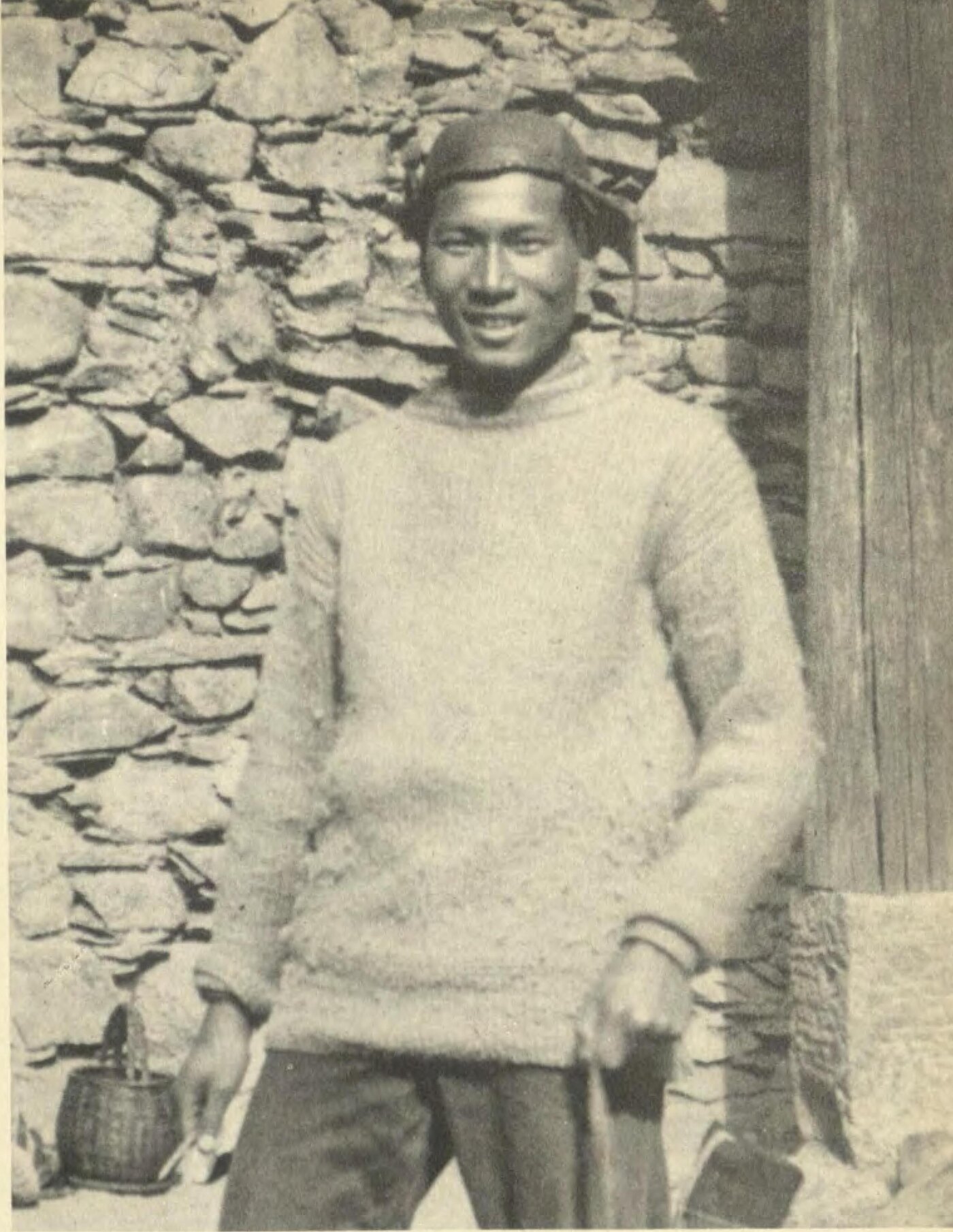
Along with letting go of the old crew, she let go Bill’s exuberant and unnecessary provisions too. In a rented Shanghai garage, she and Young pried open the supplies Bill had amassed for a proper gentleman’s expedition: folding stoves, nine saddles, 336 pairs of thick wool socks, and in Ruth’s words “an armoury of guns.” She took almost none of it. What she kept was Bill’s own clothing, cut down by her tailor to fit her, and the smallest pair of his hobnailed boots, which she had resized to fit by a Chinese shoemaker. She had taken over his mission, and now she would be walking in his boots.
Among her many reductions, she made a few significant additions. She packed baby bottles and formula revealing a new wrinkle in her plan. While Bill had set out to capture a live adult giant panda that can weigh 200 pounds or more (90 kg), her target was finding a baby panda cub who she hoped to capture, carry, and care for as a surrogate mother all the way back to the United States. She didn’t want a pelt. She wanted an alive and healthy smaller bear instead.
What followed happened at a speed that put the expeditions before her to shame.
On September 27, 1936, she started up the Yangtze River by boat to Chongqing. Then on October 20, her small caravan walked out of Chengdu’s west gate toward the mountains considered the foothills of the Tibetan plateau. The days ahead mixed roughness with joy and wonder as they traversed dirt roads, bandit country and deprivation rarely visited by Westerners. From a squalid inn she wrote home that it was “all very wonderful — even the appalling ‘terlets’” — her spelling of the open-pit latrines. Even that, she felt, couldn’t “dim the lustre of this particular expedition.” At Wenchuan they slept in a ruined Buddhist “ghost temple,” where souls in purgatory and life-size blue horses, one headless, were painted brilliantly over walls in the empty rooms they camped in. From there they pushed higher, making an empty monastery they called “the castle” their base for the panda search ahead.
Harkness stayed behind at basecamp as local crews searched into the heavily forested mountains around them. Amazingly, local hunters stumbled upon an unbelievable find, and on November 9, in dense mountain fog, ten thousand feet above sea level, Quentin Young reached into the hollow trunk of an old spruce tree and pulled out a three-pound panda cub. They had captured a panda baby.
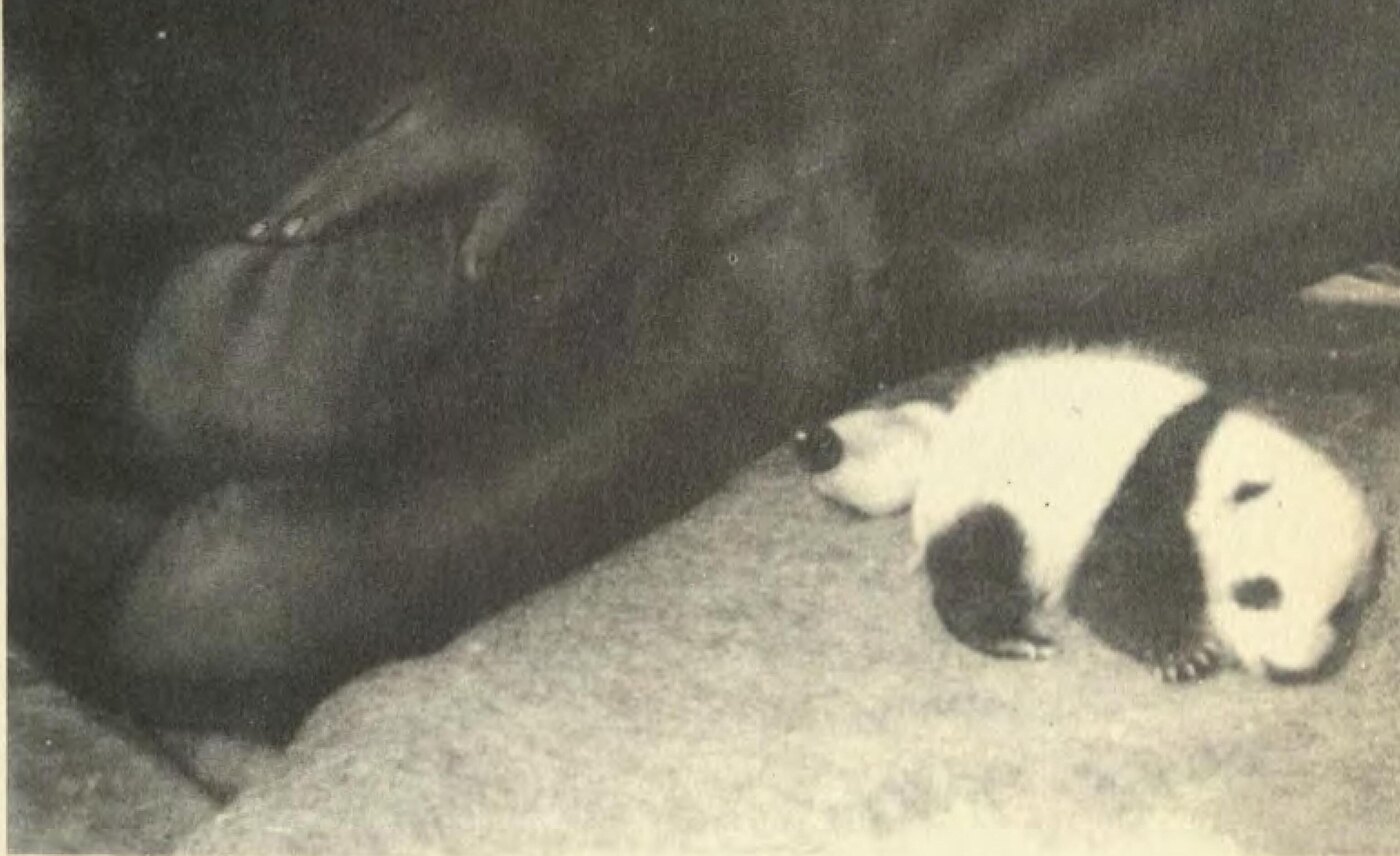
They would name the baby bear Su-Lin and Harkness would care for her like a mother, calling her simply “Baby.” Bill had spent two years preparing and waiting without ever reaching the field. Ruth had been in the field about six weeks and had captured the prize. “No childhood fairy tale,” she wrote, “was more dreamlike, or more lost in a dim haze of make-believe.”
The march down the mountain and homewards was a triumph. Carrying Su-Lin — “the most precious thing I ever possessed” — the small team retraced in days what had taken weeks. The stretch from the castle down to Wenchuan, which had taken five days on the way out, they were able to cover in a single ten-hour push. They crossed over the swaying bamboo bridge over the Min River and later into Guanxian, a township and ancient irrigation system now known as Dujiangyan, built around 256 BC in the Qin era and still in operation today. (On a personal note: this happens to be a short distance from where I lived in China for several years, at the Daoist Monastery Mountain Qingcheng Shan.) A car picked them up and transported them into Chengdu on November 16, and a flight the next day with Su-Lin riding the cockpit as Captain Mac’s “pidgin cargo” landed them in Shanghai.
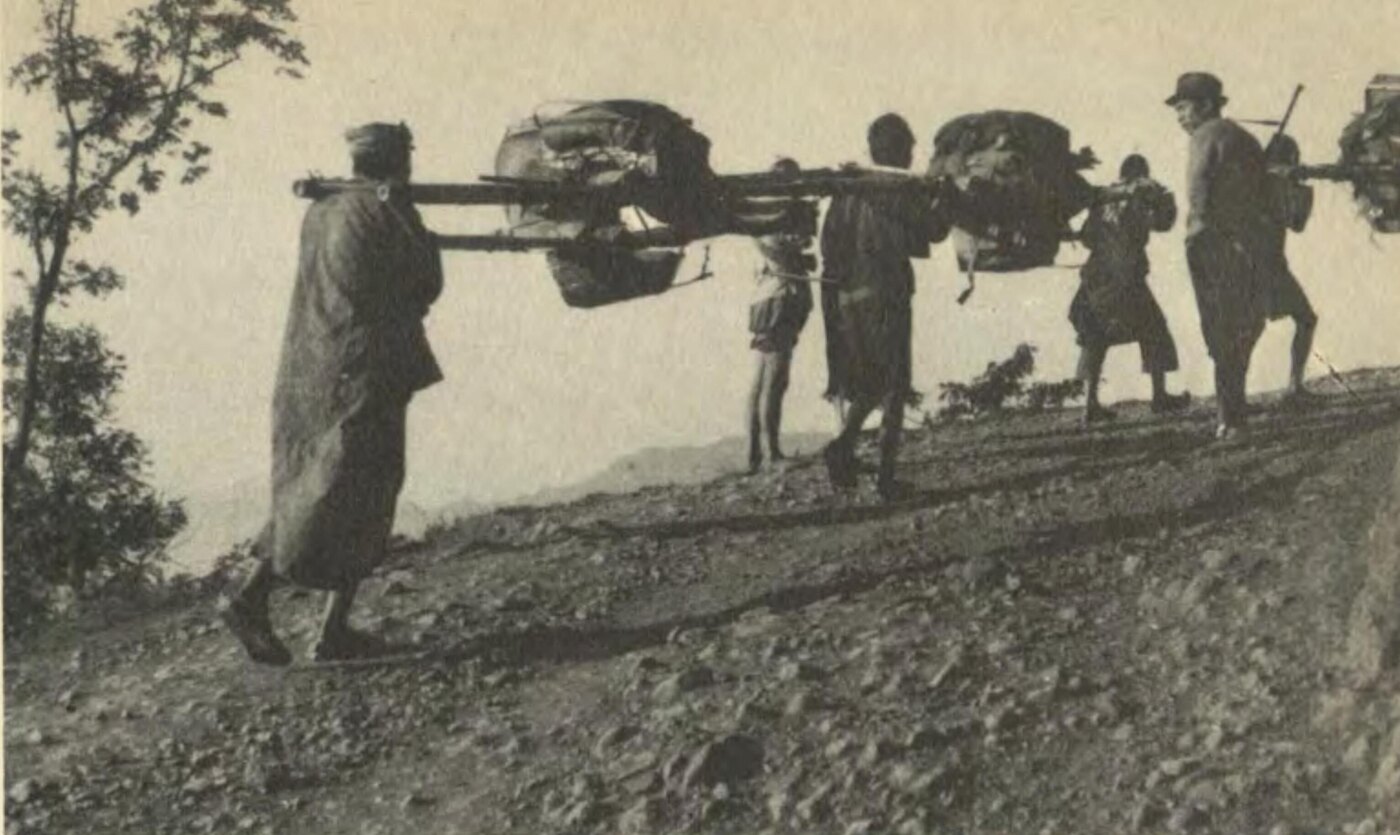
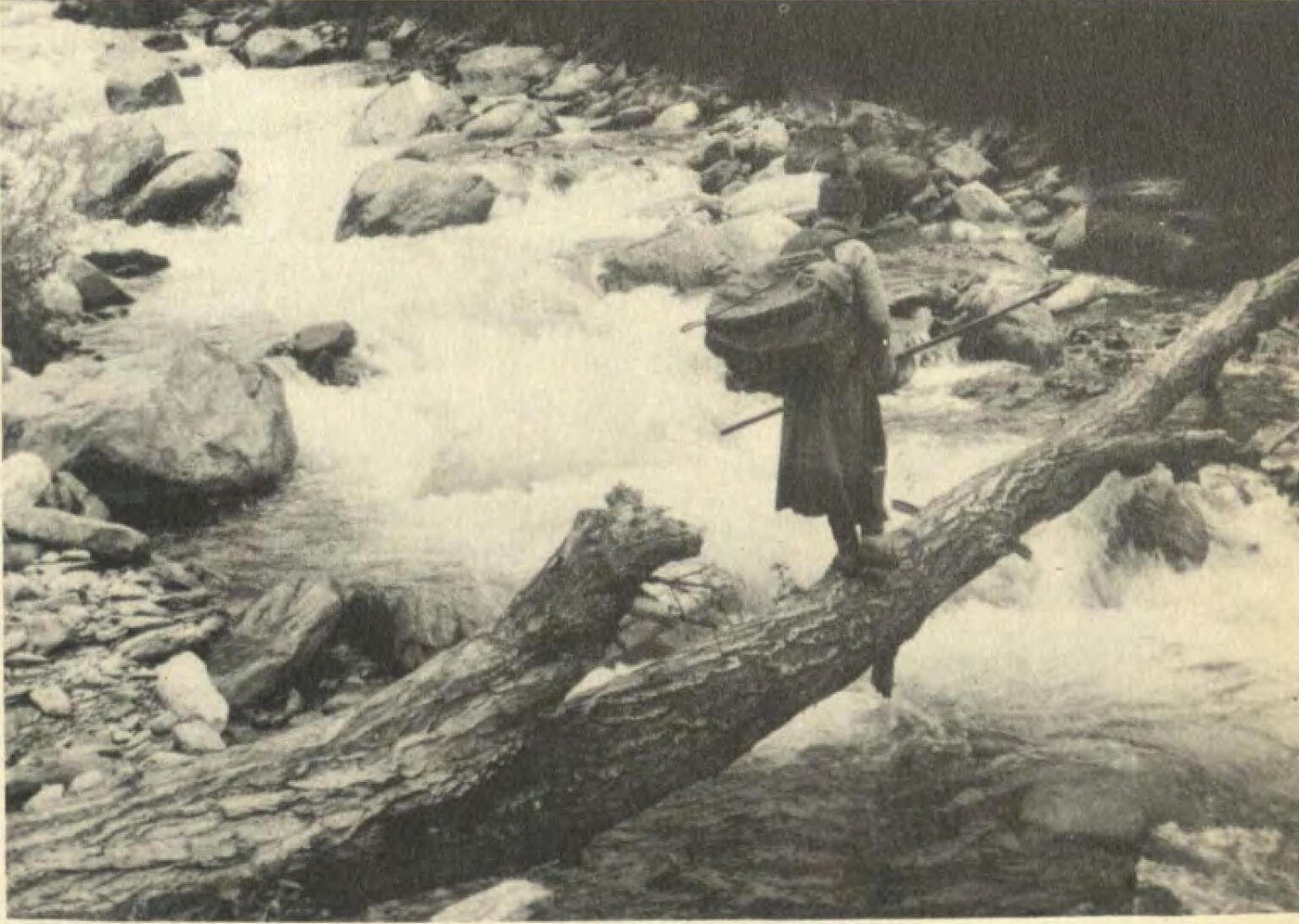
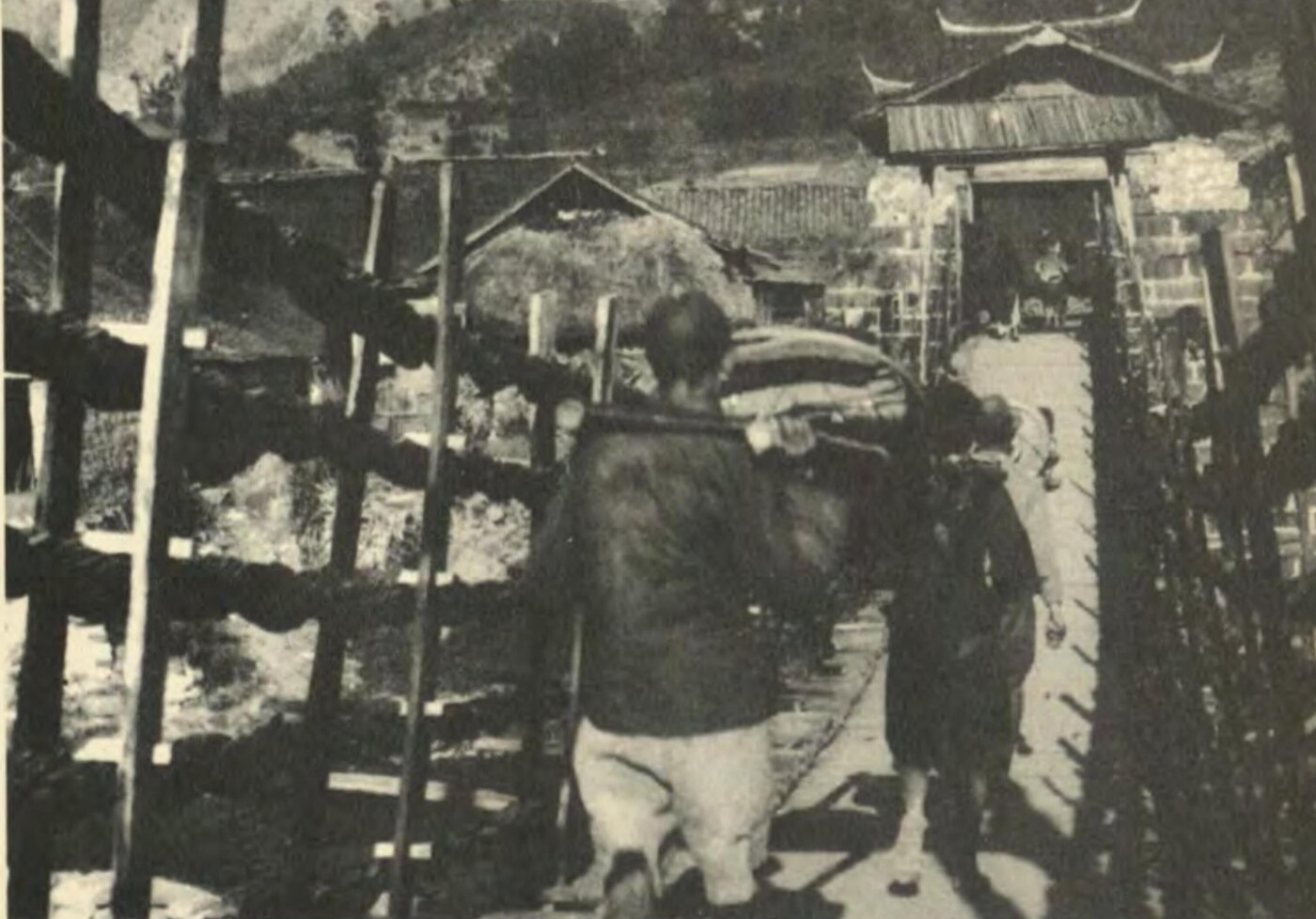
Croke writes: “these had been the happiest days of her life and it was hard to let go. Her success in proving wrong all those patronizing people in Shanghai and New York would seem so much smaller a contentment than that of a hard march, of picking herself up when she thought she couldn’t walk another mile and walking two more miles… Life here had been the appreciation of a single perfect egg, of experiencing so completely the fullness of a moment that it left no room for longing.”
Getting the panda out of China took a bit of luck and one last improvisation. Detained by customs in Shanghai, Harkness worked her connections until, on December 2, she boarded the ocean liner President McKinley with Su-Lin and an export voucher reading, in full, “One dog, $20.00.” Just over two weeks later, she stepped off the boat in San Francisco to what the Examiner called “the greatest press reception San Francisco lavished upon any celebrity since the coming of George Bernard Shaw.” The New York Times had once dismissed hers as a “much hooted-at expedition.” Now the media and public couldn’t get enough as she took a series of trains and PR stops eastwards. “All that seemed lacking,” that same New York Times noted upon her arrival in New York, “was a ticker-tape parade and a reception at City Hall.”
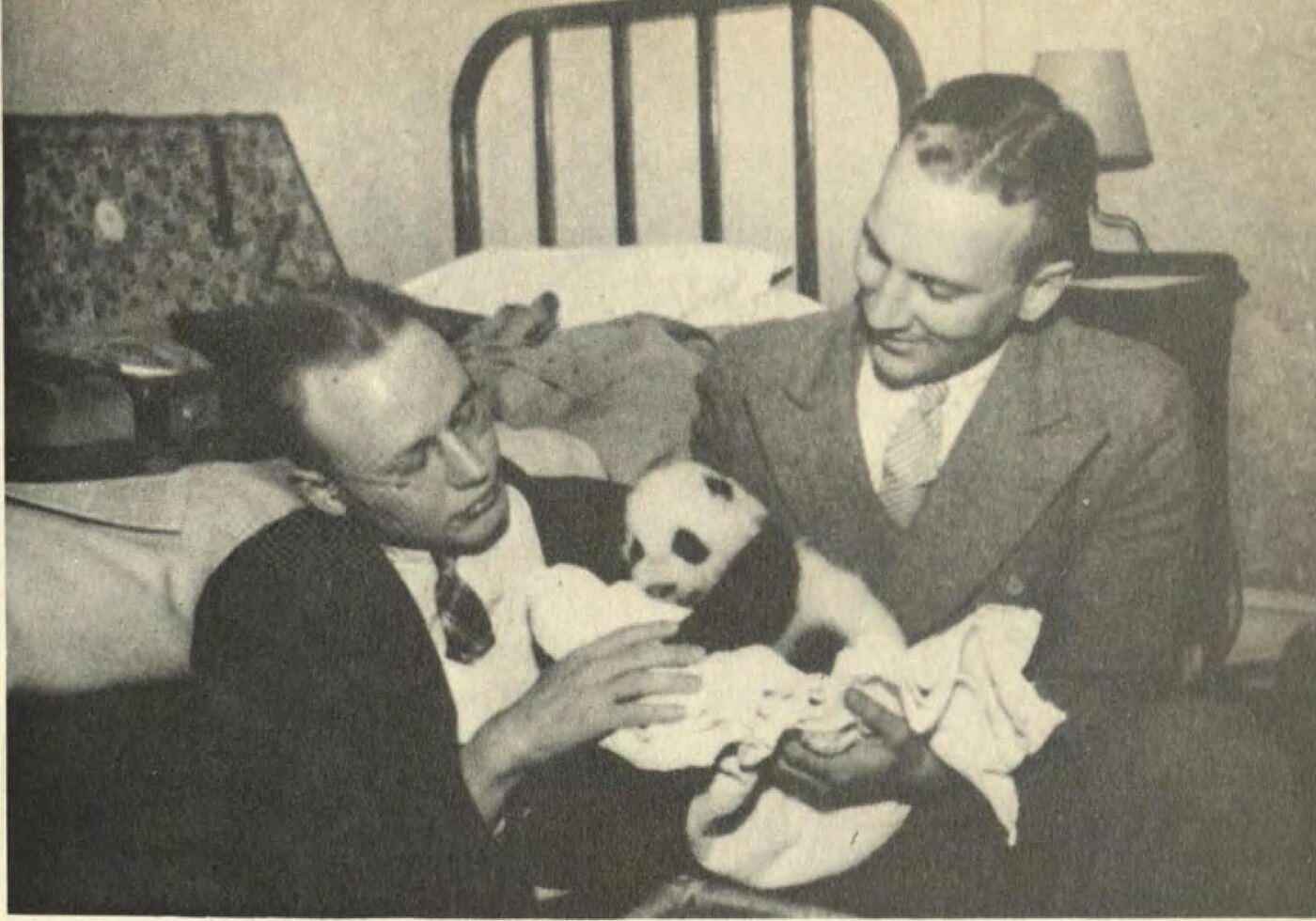
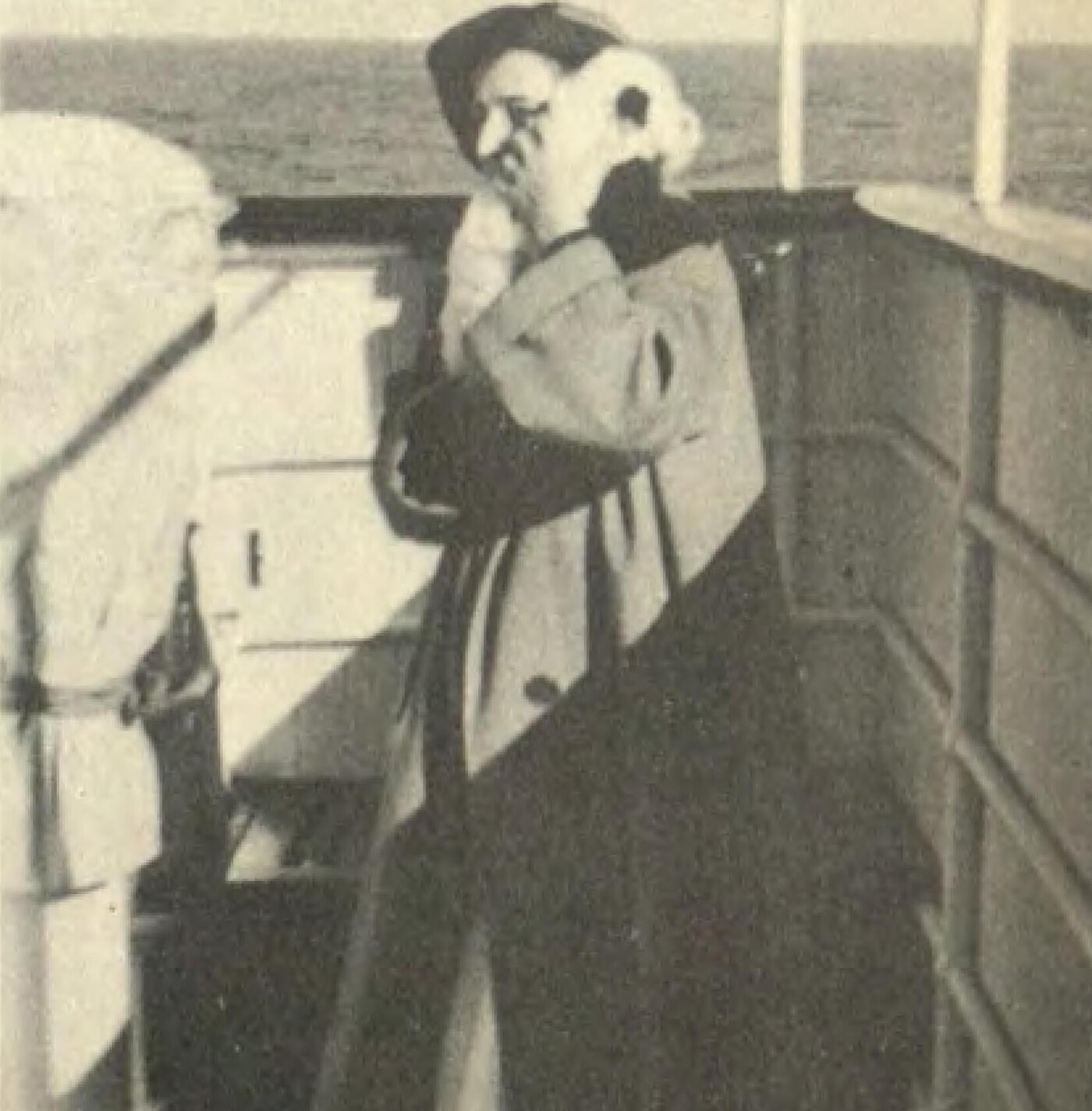
By February, Su-Lin was in Chicago drawing record crowds at the Brookfield Zoo — the first live giant panda in America, on display in the same city whose Field Museum still exhibited the panda pelt the Roosevelts had shot. The dress designer had outdone the great hunters. She was thirty-six and, though she could not know it, standing at the peak of her life.
Three Endings Offered
The science of goals tells us that a pursuit isn’t a singular event or moment but a multi-stage journey. Before we commit, we deliberate. Once we commit, we cross into action. We hit middles that sag, delay us and lead us into reconsideration. When progress stalls or our desire for the goal wobbles, we can slip into what researchers call an action crisis, a kind of “stuck in the middle” languishing characterized by self-doubt, diminishing motivation and a lull in progress where we re-ask whether the goal is worth pursuing at all.
We often reduce the retelling of most goals to its two bookends: the decision to start and the final act culminating in the triumph or the anguish of failure, leaving out much of the struggle, phase reading and decision-making that actually defines pursuing a goal. Interestingly, the goal literature tends to focus on the starting, the persisting, the pushing through and the finish and goes strangely quiet at the far end of the arc: the exits, the endings, the after. Even the research on letting go of goals mostly studies goals we failed to reach. The literature goes quiet after the win. But what about the goal you achieved and the chapter that comes after?
Seen through this question and lens, Ruth’s decade after her peak was not one long slide or even a cautionary tale on the perils of the post-peak, but instead as I’d like to argue, a case study in phase reading and navigating what comes after goal pursuit.
At least three times over that final decade, life offered Ruth Harkness an ending to her panda chapter — a moment where an exit was on offer and a phase had to be read. Could she see the endings offered? Can any of us, from inside the moment?
Let’s look at her three offered endings and what became of each.
The Triumph: Spring 1937
The end of 1936 and start of 1937 offered the purest ending to her tale.
As the winter of 1936 thawed into spring 1937, a host of triumphs arrived in succession. While Ruth and the cub wintered in a New York hotel, the fetes began. On January 16, 1937, she became the first woman ever to attend the annual banquet of the all-male Explorers Club, a club whose members had included Teddy Roosevelt, Shackleton, Peary, and Byrd. During the event, she held Su-Lin up to the microphone for a live radio broadcast and the baby panda cried on air. The widow who months earlier had no standing in the boys’ club of exploration now stood at the forefront of it.
Panda-fever took over the country. In February, Su-Lin was officially welcomed at the Brookfield Zoo to record-breaking crowds and “quite effortlessly” became “the most popular animal in the country.” Ruth landed a book deal to tell her story. And Brookfield paid her $8,750 for Su-Lin, which was much less than she had hoped for, and framed, tellingly, as funding for her next expedition.
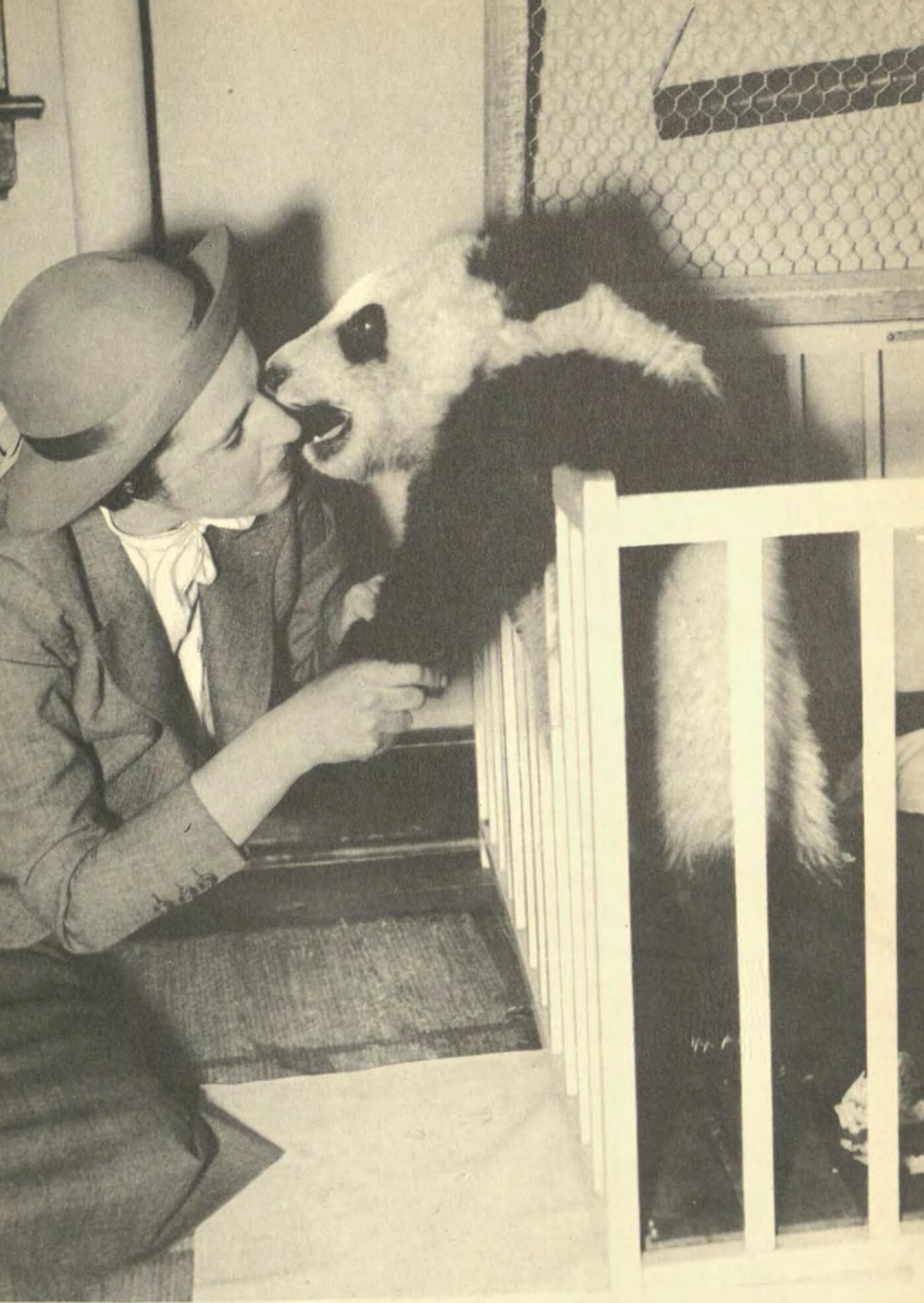
Here was her first ending on offer: the woman explorer who had followed her husband’s goal and beaten the great hunters, captured a panda, and brought it back alive. Now she had a book deal and legendary tale to mint in her own words. She could have stopped. Nothing about this moment demanded another panda.
But the goal had already grown a sequel. Su-Lin, then thought to be a female, needed a mate, and Ruth was “so mad to get back to that life of adventure” that she took the smaller check and figured she’d make do. When she arrived back in late summer 1937, Japan and China were at war and Shanghai was under bombardment. As she jokingly wrote home, “You’d better get out your maps children…[because] I’ve changed my course…and Pandas.” With the previous river route blocked, she rerouted across half of Asia to reach Sichuan again.
While they’d follow a similar route into the mountain and stay at the same abandoned temples and spots, the second expedition’s crew had changed. In spite of her letters, Quentin Young had vanished, and so Wang Whai Hsin, her cook who spoke only pidgin English, became her entire team. The pair wintered alone in the ruined castle while a hired crew of around a hundred local hunters swept the mountains without her in search of Panda Number Two.
Her letters home turned dark as isolation, culture shock, uncertainty and waiting weighed her. “Slowly but inevitably I am losing my mind,” she wrote, and she leaned on the local corn wine against solitude in the sundown hours. And on December 10, 1937, she wrote a question revealing everything her fame and initial triumph hadn’t settled: “This year I’m afraid will end in failure…and what will I do if I fail?”
Fortune dealt her one more good hand. Just eight days later, her hunters caught a second baby panda. It was carried to the castle on Christmas Eve. She had done it again. They initially named the panda Diana, later Mei-Mei. Twice now she had gone up the mountains after a panda, and twice she had come down carrying one.
Two trips, two pandas, two triumphs. If one wasn’t enough to end the chapter, could two be? Could any number?
The Redemption: Summer 1938
By the time Ruth Harkness sailed for China a third time, Su-Lin was dead.
The world as a whole was on edge as Nazi Germany edged toward war, while global economies still reeled from the Great Depression and public sentiments soured. Following a brief illness and, in spite of the zookeepers’ efforts, Su-Lin died on April 1, 1938 from pneumonia. Harkness, still navigating her own life journey and identity, felt drawn back to China for one more panda.
The trip’s stated mission was already melancholic. She would return to China, as she’d promised the zoo, “to save Mei-Mei from loneliness,” a companion for the panda now alone at Brookfield, and ideally landing the male she had twice promised and twice failed to deliver. In a sense, Brookfield’s original $8,750 had been contractually paid toward this very expedition and its stated prize. She had to go back.
But the world she returned to was no longer the one she had conquered heroically and singularly before. A Chengdu professor had managed to buy a baby from local hunters and deliver it to the Bronx Zoo, which paid three hundred dollars, a small fraction of Su-Lin’s price. Pandas were being hunted and captured at an increasingly alarming rate. Her impossible feat of 1936 was becoming mail-order.
Notably, her third expedition wasn’t even an expedition, merely logistics, because this time Quentin Young had cabled ahead: pandas were already secured and waiting in Chengdu. All she had to do was get there to collect them. So, Ruth booked a flight from New York to San Francisco and then took the Pan Am Clipper across the Pacific to Manila and Hong Kong, finally arriving in Chengdu.
What she found in a borrowed Chengdu garden was Su-Sen, less cuddly baby and more frenetic adolescent. Harkness described the panda as a kindred spirit, fearless, untamable, and “raising hell” in the trees, and repeatedly refusing everything captivity offered. Watching the panda through that hot summer as she typed letters and wrote, Ruth arrived at “an epiphany as strong as the one that had led her to bring a baby bottle on her first trip.” She just couldn’t bring this particular panda back. Instead of shipping Su-Sen to a zoo, she would carry her back up the mountain, to the exact spot where she had been captured, and set her free.
Which brings us back to the rain-soaked cave where our story began. Upon release, Su-Sen didn’t hesitate and defiantly “wandered off without a backward glance,” and Harkness and Wang’s miserable week-long vigil began, watching constantly for the beloved panda yet hoping never to see her again. Her freedom regained, this third panda wouldn’t return.
Here was her second ending on offer: Ruth Harkness ended the panda hunting era she herself had begun, just a year or two before it was formally banned in China and years before the world’s conscience caught up with hers. It was a clean close to the chapter, and arguably a poetically perfect one. She read the phase and moment exactly right: the age of taking pandas was over. Seeing an ending, it turns out, was never her problem. Claiming one as her own was a different act entirely.
On this third trip to China, she could end the goal. What she could not end was the identity built around it. How was it possible that she could author so perfect an ending for Su-Sen, and yet still couldn’t author an ending for herself?
The Tragedy: Late 1938 to 1947
Ruth Harkness had achieved her goal. But having oriented her last few years as a female explorer in search of pandas, the mental shift must have been hard: no target to go after and the felt progress of pursuit no longer pulling. She languished. She came down from the remote panda mountains and returned to Shanghai as the city filled with Jewish refugees fleeing Nazi Europe. A “degenerate frame of mind” was the phrase she put on her mood. In Shanghai she toyed with getting an apartment with writer Emily Hahn (and Hahn’s pet gibbon) and had an intense affair with an Argentine gem merchant. Nothing quite engaged her fully and she lamented, “I’ve simply got to find myself again.”
Wanderlust and the search for what comes next pulled her to Darjeeling and Sikkim, India, where she found a certain contentment in the mountains and Tibetan borderlands, writing “For the first time in the last four years I believe I am approaching the state of being a normal human being.” In December 1938, she rode a pony along a Lhasa trade route up to the Natu La pass (14,200 ft) and spent Christmas Eve “at the end of the world” in a trail bungalow. Paging through old journals and borrowed photos of Lhasa, she found something new to aim at: “1939 at home, the Spring of ‘40 to Lhasa!”
By 1939, she was back in New York and the Midwest as the world went to war and she struggled to plan out her second act. She was now, in Croke’s words, a “benched explorer, virtually bankrupt” and “unable to make a career of writing,” trying for the “humpteenth time” to “start life over again.” She participated in a lecture tour and Chinese-relief benefit, returning home “aimless and broke.” War made the Lhasa goal impossible. Ruth would later diagnose her own condition in print:
“If there is anything in the world a little more useless than another, it is an unemployed explorer… explorers are a poverty-stricken lot who have to go begging at the courts of the mighty… Sometimes they even get to the point where they aren’t quite sure what there is left to discover. Then indeed is the world a bleak and unromantic sphere.”
Ruth’s self-awareness is remarkable even as she struggled to land on her next phase and experienced increasing misfortune.
In early 1940 she substituted her target again following a lunch with her agent Jane Hardy where they “concocted an expedition to South America.” And by February 23, 1940, she sailed for Peru. She couldn’t hide what was actually calling her though, as The New York Times reported her purpose was “to study the descendants of the Incas for comparison with the inhabitants of Tibet.” Was this a real re-engagement or was this her Lhasa goal pursued via Peru?
Her two-year stint in Peru unfolded as another slow drift, first in a Lima pension scene she called “a rather elaborate nothing,” and later inland in a primitive thatched “chalet” costing under a dollar a month and having no doors or windows. She lived on tortillas and beans, passing evenings playing rummy and drinking whatever local booze was available, still hunting the substitute for the goal she hadn’t let go of: a “Peruvian panda” that did not exist. Malaria and heavy drinking wore her down further. Her book and her letters told those same months in two different registers. In print, she reached for meaning: “the whole thing became the pursuit of destiny.” To her friend Perkie, she confessed: “I drink for oblivion…In fact, I am having a drink right now.” Even mid-oblivion, she could still name the trade she kept choosing: “I might not like that sort of life if there were no goal to be reached.”
The years after ran quieter. Pangoan Diary was published in 1942, and it “contained none of the intensity and joy” of her first book. Her writing career did not recapture the heights of years before. By 1944 the world’s most famous explorer was writing recipe-and-travel columns for Gourmet, “Saludos” from Peru, then “Mexican Mornings” from a village in San Luis Potosí, Mexico. Her health did not rebound and the drinking deepened. By her own admission, she had spent her life “wandering the lonely world. Searching sometimes one thing, sometimes another. Often it seems to me that I have lost my destiny and am hunting to find it again.”
Here she was with her third ending on offer, except this time it wasn’t an on- or off-ramp but a path she was already standing inside and living: writer, columnist, traveler. The next chapter was already a fact. Pangoan Diary was her second book; the Gourmet columns were a living; the village in Mexico was an independent life on her own terms. What appears to have never happened was acceptance. What held her back from naming this her chapter and her settled identity? Was it the haunting of her previous peak? The inability to move on? Or the overall diminishment by comparison?
She lived this ending for nine years yet never once claimed it. In her own telling she remained an unemployed explorer, never the re-employed writer. In July 1947, weeks after a suicide attempt, she traveled alone to Pittsburgh and checked into the William Penn Hotel near midnight in a humid thunderstorm. Two nights later she was found dead in the bath. She was forty-six.
The first ending she declined, the financial pull too strong and return to China too enticing. The second she authored, but for someone else, Su-Sen, the free-spirited adolescent panda she returned. The third she lived inside for nine years and with a host of accomplishments and stories to tell but seemingly without ever accepting that it was hers. A chapter she was squarely inside but looking longingly back at the one that was already closed.
What does it take to author an ending? Or just be content and say yes to the chapter you’re already in?
Living the Question: How Do You End a Chapter?
There is no tidy answer to that question, not for Ruth, not for any of us. The skills of pursuit don’t come with skills for endings; there is rarely a clean move or a ready replacement for the goal that organized us. That endings are messy is obvious. What’s less obvious: the messiness is not a misreading or a failure. It’s an accurate perception. We’ve lost the target that oriented us and are awash in conflicting emotions.
We conflate three different states at the end of a pursuit. Unfinished is about the work: tasks left undone (and there are always tasks left undone). Unclosed is about the story: a chapter completed but never ended, no line drawn, no next chapter named. Unresolved is about the question: the ambition that never got a fair test, an honest try. Each aches differently. Unfinished nags. Unclosed lingers. Unresolved haunts.
Ruth’s after held a bit of all three. Her work was unfinished, because there were always more expeditions, more articles, more logistics. But that was in a way the trivial ache. Her chapter was unclosed. Completed, celebrated but never ended. A decade later she was still the panda lady. And her deepest question stayed unresolved. Who might Explorer Harkness have been with backing, peace, and a fair second act? That last haunting state and pain we might call counterfactual grief, the mourning for a version of yourself that never got tested. The what-if-only.
The after-phase operates as a form of ecological collapse: you no longer have your environment, habits or tasks to be completed. You no longer have the goal nor the self oriented by that target. You lack confidence and clarity, and you struggle to decide. Your self-narrative has lost its plot. It’s just over and you now enter a realm of indeterminacy.
You might have ended on an “I failed,” an “I finished and felt empty,” or an “I never got a fair shot,” but ambiguity imbues all of these states when you realize something harsher: What if the goal-framed version of me who I liked best and felt most alive only existed inside a reality I can no longer return to? I’m now wearing a personal identity whose clothing I no longer fit into, visible only in memory by looking back.
We all inhabit some unclaimed chapters in our life. The painter who calls themselves an artist but has stopped picking up the brush. The zombie founder who can’t let go of the title. The athlete who can’t say “former.” The panda-woman with no panda left to hunt.
Closing a chapter is harder when the next thing is still unnamed. It feels more comfortable to stick with the habitual reference of the self that was, even if it’s over. As a founder and venture builder, I often can’t help wanting a retry or reroll on something I already tried and failed. When I left a peak-career moment at Techstars in China — having established corporate partnerships and thriving startup programs but failing to stand up a full startup accelerator — the pull to repeat and recreate that goal was hard to resist. I chased backers and replacement accelerator programs in Hangzhou, Hong Kong, Singapore and Los Angeles. In retrospect, I was hunting my own Peruvian panda.
The after-phase isn’t solved; it’s navigated. The lack of an obvious answer isn’t a cop out but a recognition of ambiguity as an honest state we enter with our goals. Navigating looks less like an answer and more like a reflective practice: naming your state, accepting the identity conflict, choosing anyway and beginning to tell your new story.
The Unemployed Explorer and the Hunt After the Hunt
So, how do you go from being the greatest in your field to a more humble new beginning? A new chapter without feeling haunted, or pulled to recreate what has already moved on and away from us and is impossible to remake?
In the summer of 1938, on that cold and wet mountain in Western China, Harkness’s final captured panda walked off into the bamboo forest without a backward glance. Su-Sen became what Ruth had wished for, “once more the gay-hearted comrade of all the lusty mountain gods.” Ruth walked down and spent nine years glancing back. She had authored for her kindred spirit the exact ending she couldn’t grant herself.
Nearly a decade later in 1947, Harkness declared that “I had found no niche for myself in the busy world I had left behind.” She had done many remarkable things in her after-peak era, but none of it satisfied her, an ache compounded by a war that had closed her China, thin finances, and a world with little room for a woman explorer’s second act. So she was still, perhaps forever, “hunting to find it again.” A ghost goal retreating into a past that she, the explorer, could no longer explore — with no new goal strong enough to pull her out of the past’s gravity well.
Every ending is one we take, one we author, or one that takes us.
Which of your backwards-facing chapters lies still open? And what would it take to author a new one — or finally claim the one you’re already in?
Related Reading
Goal Pursuit Series (my posts):
- Is This the Long Middle or the Desperate End?: the companion essay on Greely’s expedition and phase ambiguity during the pursuit
- Multi-Stage Goal Pursuits: the Rubicon model of goal phases
- Stuck in the Middle: midpoint motivation collapse and the action crisis
- The Ostrich Problem: why we avoid checking progress on goals we care about
- The Science of Goals: an overview of the goal-science literature
Sources
Written:
- The Lady and the Panda by Vicki Constantine Croke (2005): the definitive retelling this essay draws on, built from Harkness’s letters
- The Lady and the Panda: An Adventure by Ruth Harkness (1938): her own memoir, borrowable at the Internet Archive
- Pangoan Diary by Ruth Harkness (1942): her Peru memoir and the after-phase in her own words, free at the Internet Archive
- The Baby Giant Panda by Ruth Harkness (1938): her short account of Su-Lin’s journey, free at the Internet Archive
Photographs:
Most of the photographs here are scans from Ruth Harkness’s own book, The Baby Giant Panda (New York: Carrick & Evans, 1938), digitized by the Internet Archive from the State Library of Ohio copy. The book is believed to be in the public domain: US works published between 1930 and 1963 required a copyright renewal in their twenty-eighth year, and no renewal appears on record for the title or the author. Two exceptions. The portrait of Harkness holding Su Lin comes from Wikimedia Commons, where it is tagged public domain. “Good-by,” the photograph of her at the crate, carries a Chicago Tribune credit on the plate, and its rights are separate from the book’s. Several plates in the book name other photographers, among them Lotte Jacobi, Wide World Photos, Eastman Kodak, Bryant Haliday and Foujita. None of those appear in this post. Images have been cropped out of the page scans to remove captions and scan edges, then resized. The Commons portrait was also desaturated to neutral and level-corrected, since the source had a blue cast.
AIDA (AI Disclosure Acknowledgement): This blog post was researched and written by the author. AI tools (Claude Code) were used to assist with structural scaffolding, editing prose, surfacing source material from prior notes, and proof reading. The cover image was designed by the author.